
DCD-Approved · NFPA 24 Certified · 10+ Years UAE Experience
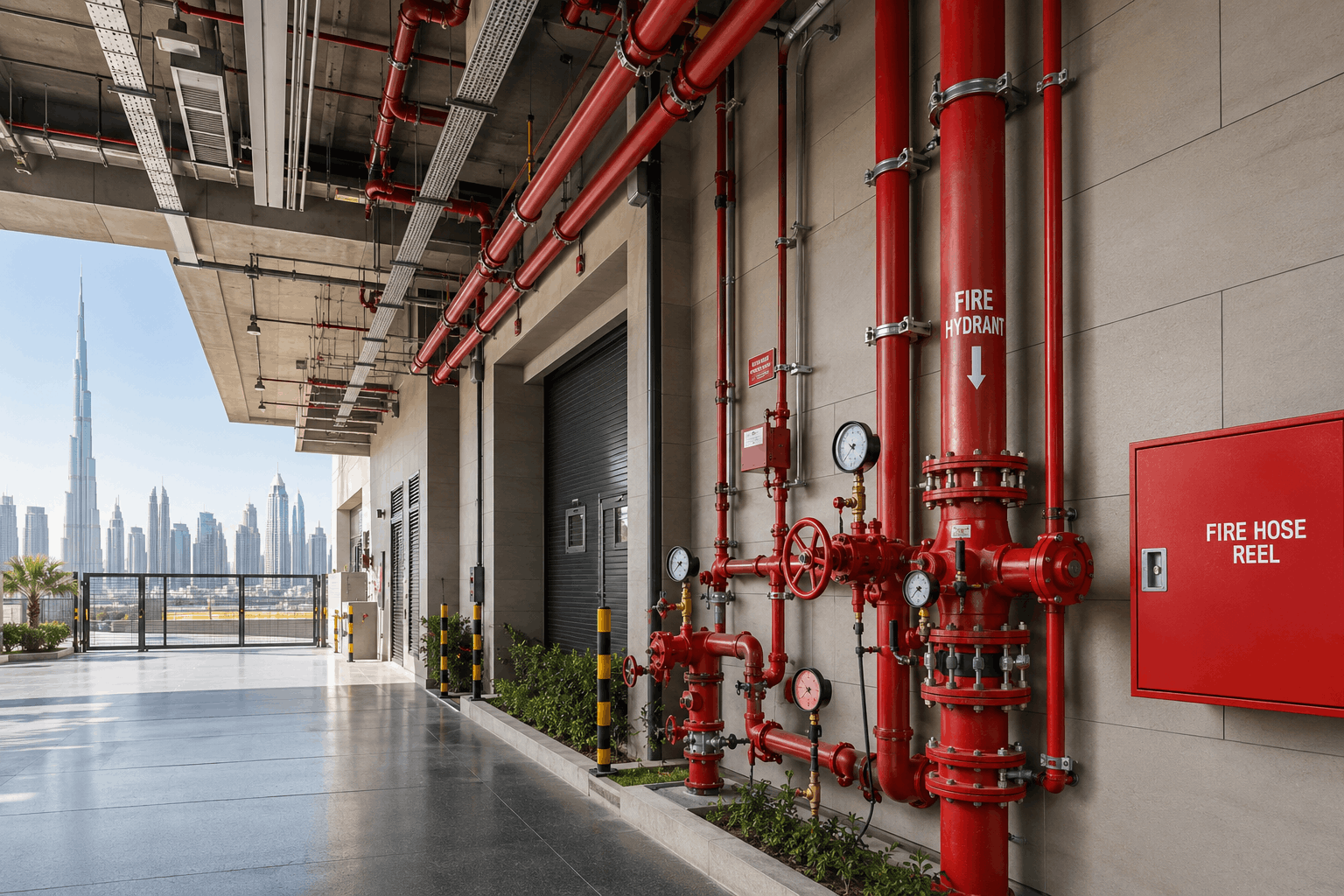
A fire hydrant system is your building’s first line of defence the moment a fire alarm sounds a fixed network of underground mains, pumps, valves, and hydrant outlets engineered to deliver high-pressure water exactly where firefighters need it, exactly when they need it. As a DCD-approved fire hydrant contractor in Dubai, Abdullah Fire Safety designs, supplies, installs, tests, and maintains external and internal hydrant networks for warehouses, high-rise towers, labor accommodation, and construction sites across Dubai. Every system is hydraulically calculated and installed to NFPA 24, with full Civil Defence design approval and witnessed commissioning.
Fully compliant with UAE regulations
Licensed & experienced professionals
Round-the-clock assistance
On-site within 60 minutes
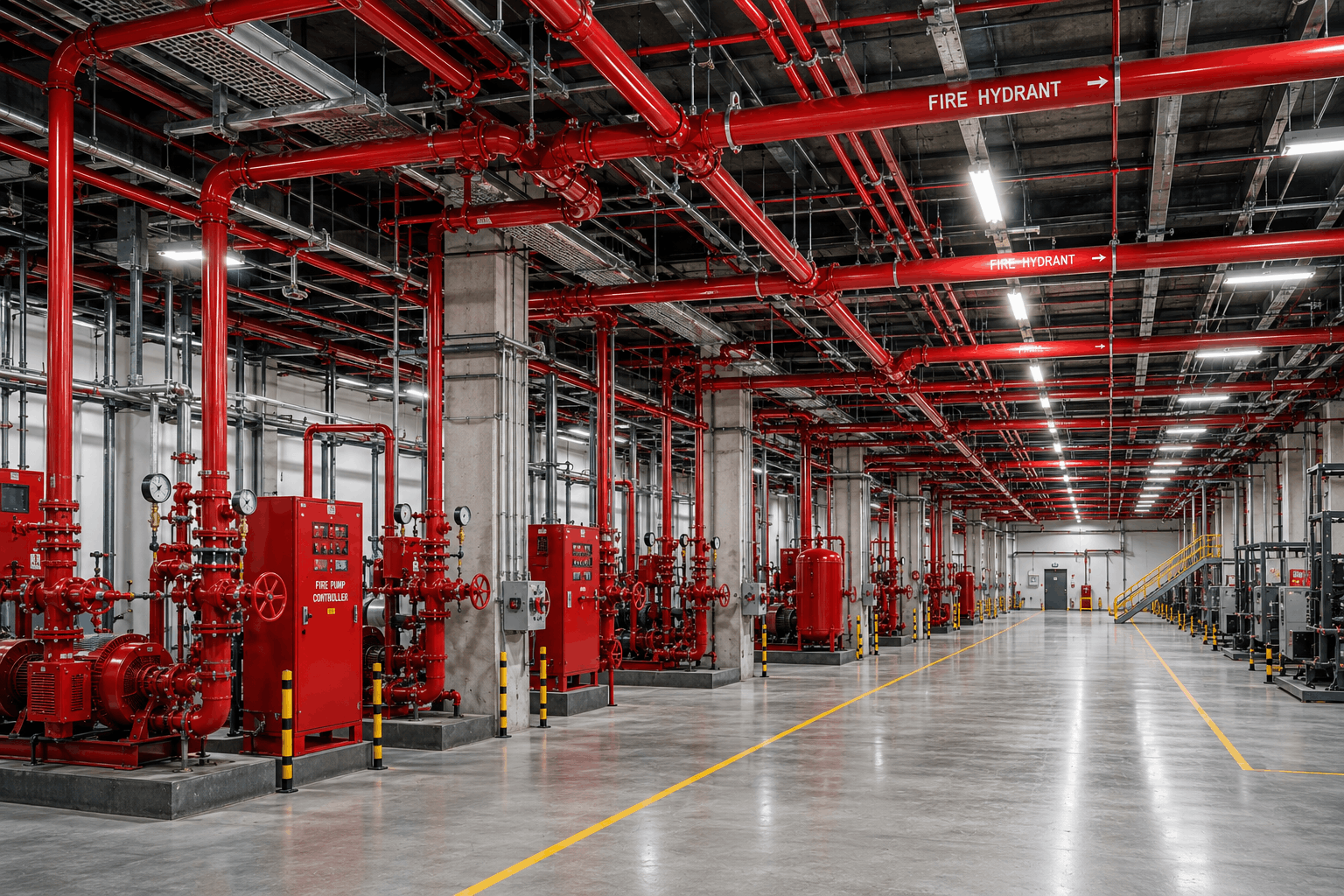
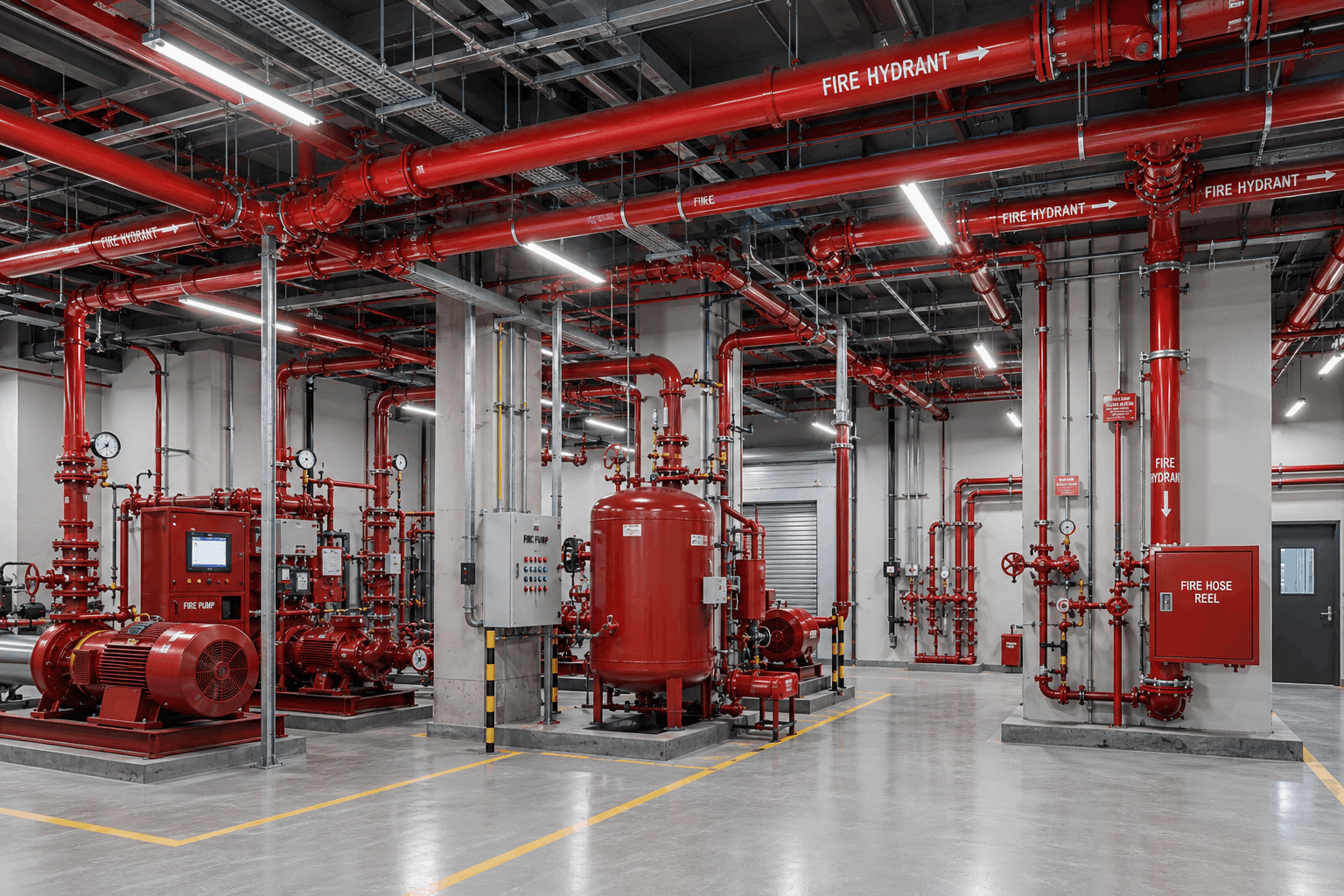
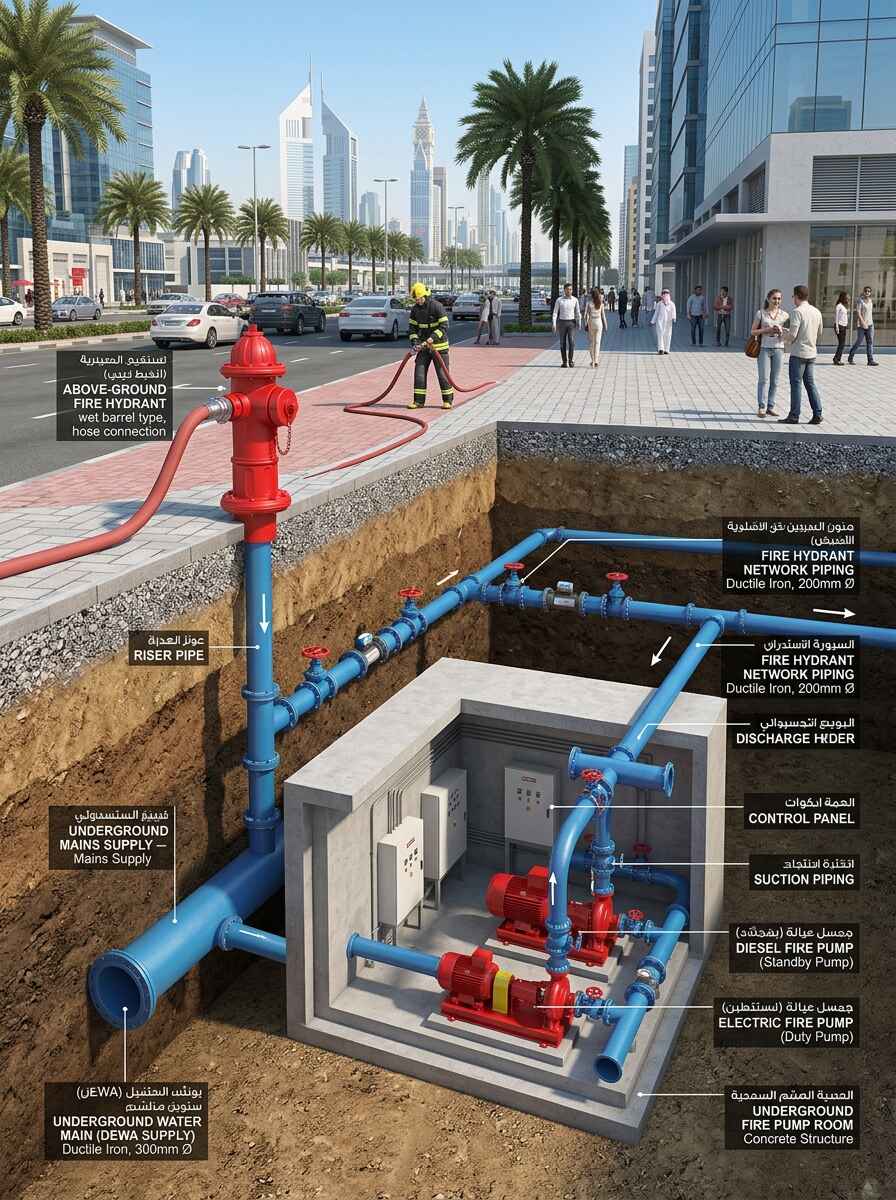
A fire hydrant system is a fixed firefighting installation engineered to deliver a continuous, high-pressure water supply the moment a fire breaks out. It combines a dedicated water source municipal supply, underground tank, or fire reservoir with underground fire water mains, fire and jockey pumps, isolation valves, and strategically placed hydrant outlets into one network that stays on standby around the clock.
Unlike domestic plumbing, every component is sized through hydraulic calculation so the system maintains the required flow rate and residual pressure even when several hydrants are opened at once exactly the condition a real fire creates.
Under Dubai Civil Defence (DCD) regulations, buildings above a defined footprint, height, or occupancy must include a compliant hydrant system to receive their completion certificate, Istifa, and ongoing occupancy approval. The system must be designed to NFPA 24 Installation of Private Fire Service Mains and Their Appurtenances and submitted for DCD design approval before
installation begins.
Hydraulic design and proper hydrant spacing are critical to ensuring firefighters can access the required water flow and pressure during a fire emergency. A professionally designed fire hydrant system provides reliable firefighting water through strategically positioned hydrants, underground or above-ground fire service mains, valves, hose connections, and a dedicated fire pump system where required. The system is hydraulically calculated to maintain the required flow rate and residual pressure, even when multiple hydrants are operating simultaneously. Under Dubai Civil Defence (DCD) requirements and the UAE Fire and Life Safety Code of Practice, fire hydrant systems are required for many commercial, residential, industrial, warehouse, and high-rise developments based on the building’s occupancy, size, height, and fire risk. The system must be designed in accordance with applicable NFPA standards, including NFPA 24 for Private Fire Service Mains and Their Appurtenances, and submitted for DCD design approval before installation. Proper testing, commissioning, and certification are also essential for obtaining project approval and maintaining ongoing fire safety compliance.

All fire sprinkler systems in Dubai must be designed and installed in accordance with NFPA 13 by a DCD-approved contractor. DCD design approval, hydraulic pressure testing, and a DCD Completion Certificate are mandatory before building occupancy. Non-compliance results in fines, failed inspections, and blocked trade licences.

Not every site has the same layout or risk profile. The wrong hydrant configuration means poor coverage, freeze/corrosion risk, or a failed DCD inspection. Here’s what we install and why each type exists:
Water sits in the barrel at all times, ready for immediate use. The standard configuration across the UAE, where freezing is never a concern simplest to install, easiest to maintain, and the most cost-effective choice for the majority of Dubai sites.
Key specs: Operating pressure: 3.5–12 bar | Outlet size: 65mm/100mm landing valve | Spacing: per DCD site coverage calculation
The main valve sits below ground; water only fills the barrel once the valve is opened, protecting against freezing or leakage in the above-ground riser. Specified for cold storage facilities and refrigerated logistics units where pipe temperature is a factor.
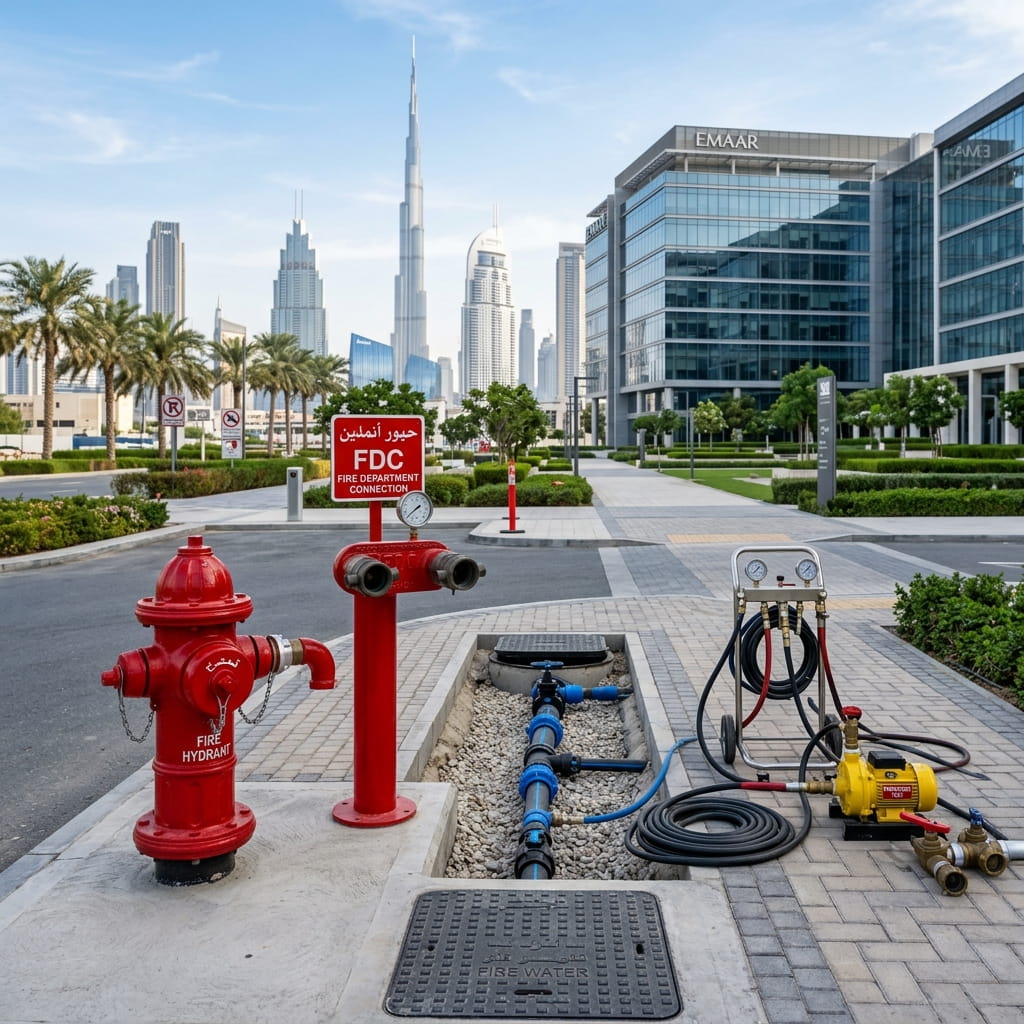
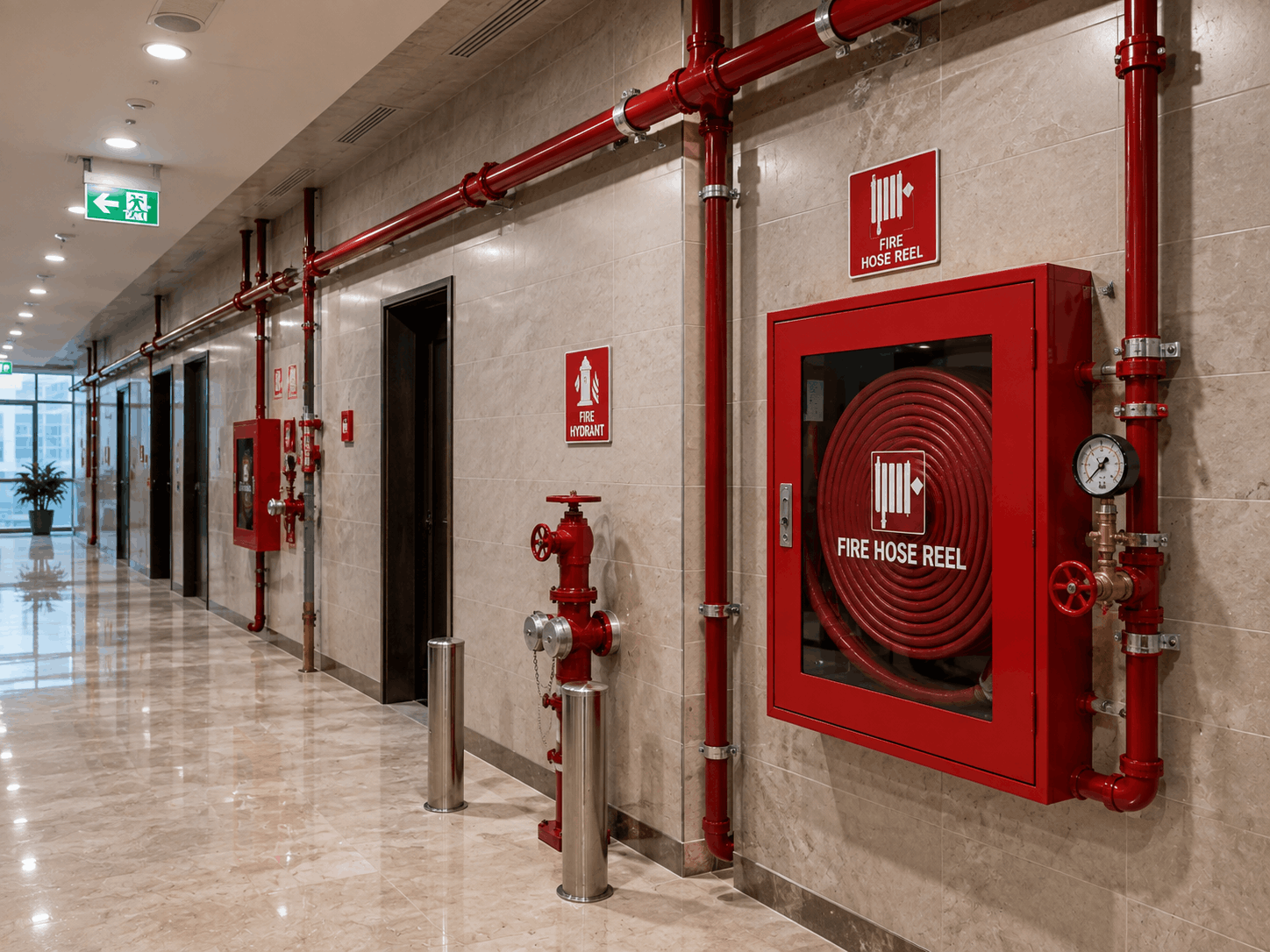
A visible, freestanding hydrant post connected to the underground main the most common outdoor configuration in Dubai, spaced around the site perimeter so firefighters can access water from any side of the plot.
Installed below grade with an access chamber and cover, used where surface obstructions, traffic loading, or aesthetics rule out a pillar hydrant common on mixed-use and landscaped commercial developments.
Project Compleated
Years of UAE Exprience
Emergency Support
DCD Compliance
Understanding the sequence of operation shows why a properly designed hydrant system is the backbone of manual firefighting and why DCD engineers check each of these stages during inspection.

A fire is reported and the Dubai Civil Defence fire brigade is dispatched to the address, arriving with hoses and appliances ready to connect to the nearest hydrant outlet

Firefighters locate the nearest pillar, underground, or landing valve hydrant clear signage and unobstructed access, both DCD requirements, are critical at this stage.

The hydrant valve is opened. As flow begins, system pressure drops and the jockey pump which maintains standby pressure detects the change instantly.

Once demand exceeds what the jockey pump can sustain, the main fire pump (electric or diesel) starts automatically, restoring and holding the pressure the hydraulic design requires.

Water flows through the underground main to the open hydrant at the calculated flow rate and residual pressure, verified during commissioning to match the original hydraulic design.

The system maintains continuous flow for as long as required, drawing from the storage tank and pump set, until firefighting operations are complete and the valve is closed.
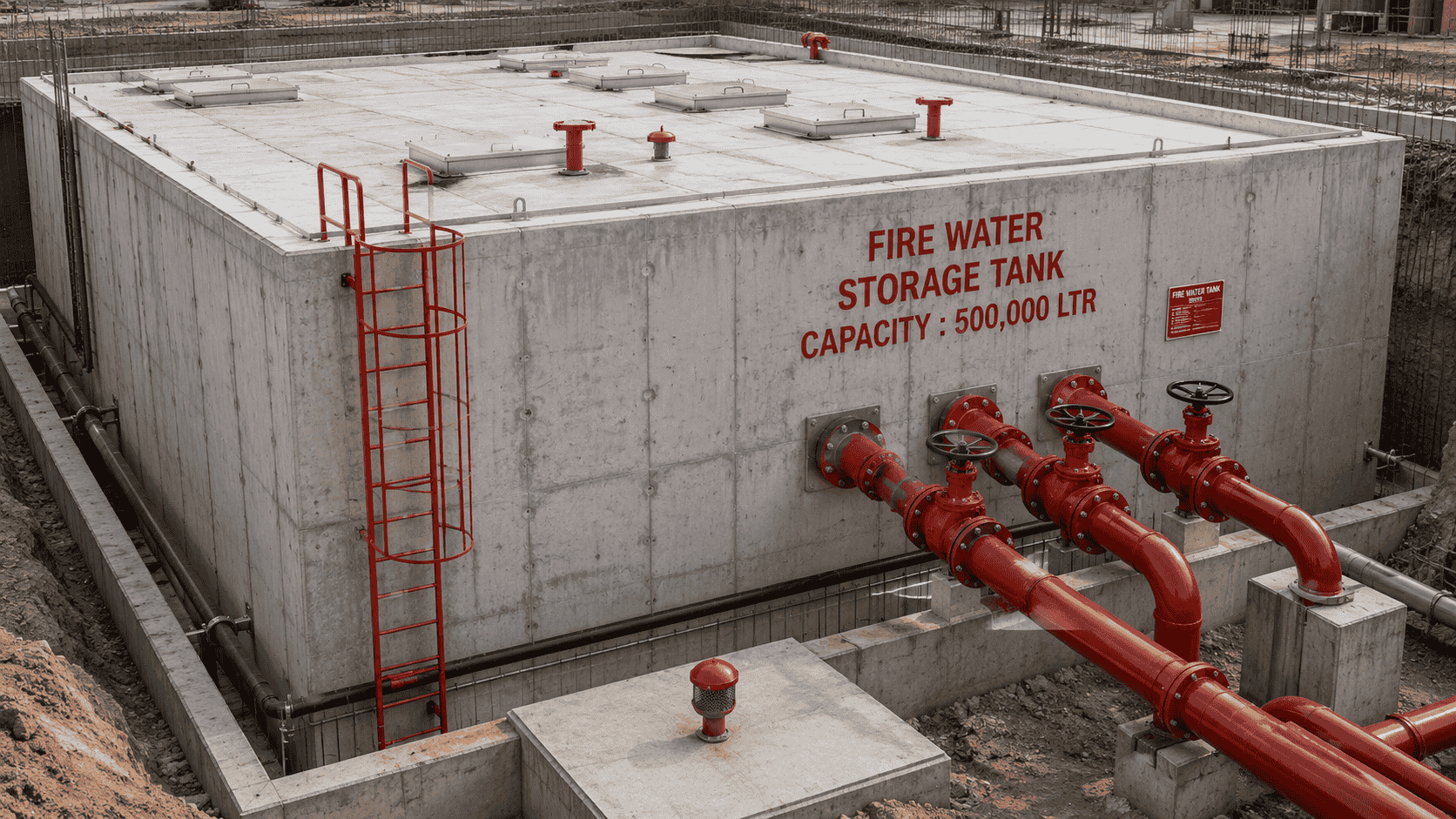
A fire hydrant system is only as reliable as its weakest component. Here’s every major part we supply and install and why specification quality matters:

Dedicated underground or overhead tank sized to guarantee water availability even if the municipal supply is inadequate. Capacity is calculated from occupancy type, hazard classification, and required fire flow duration per DCD and NFPA 24.
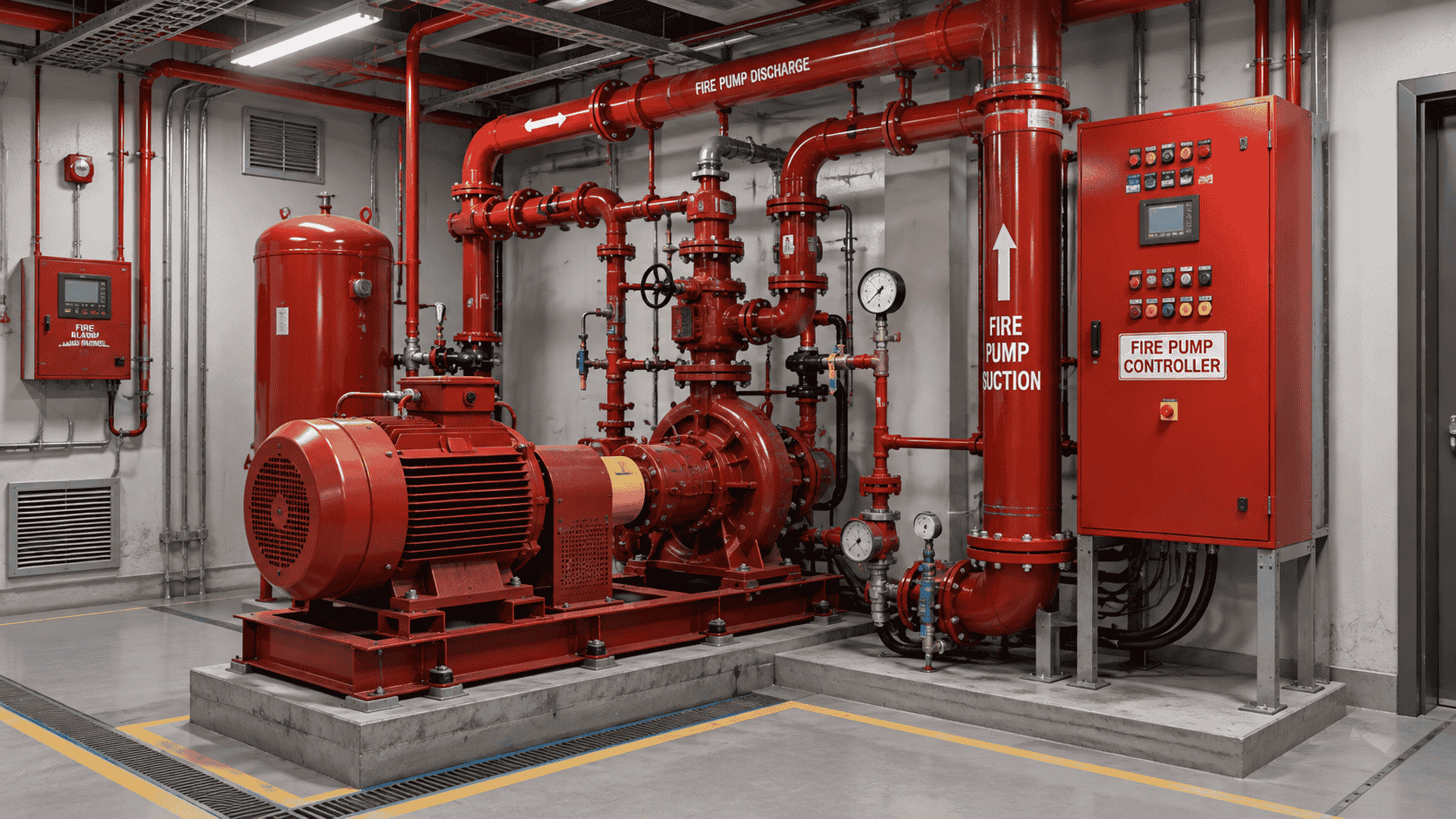
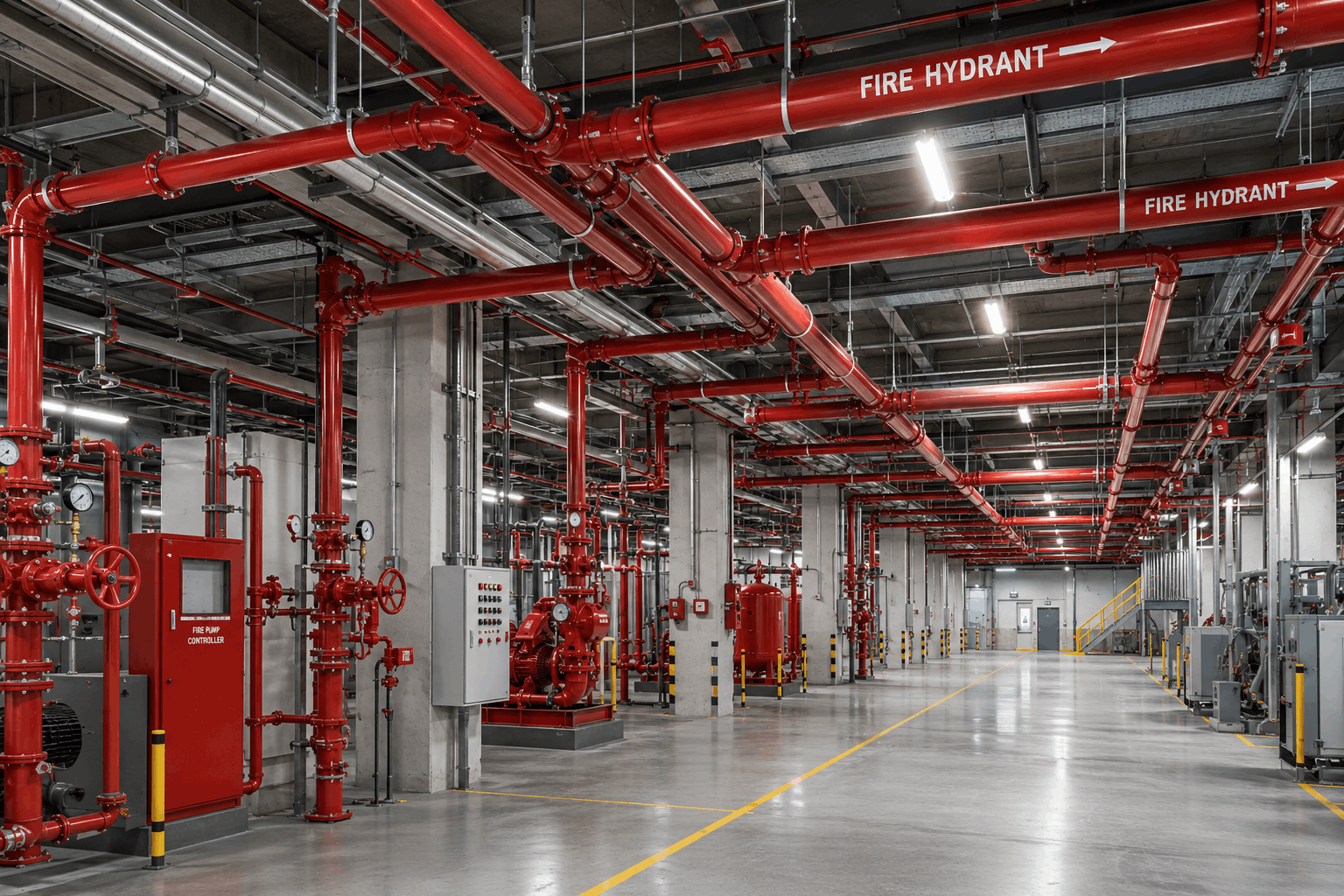
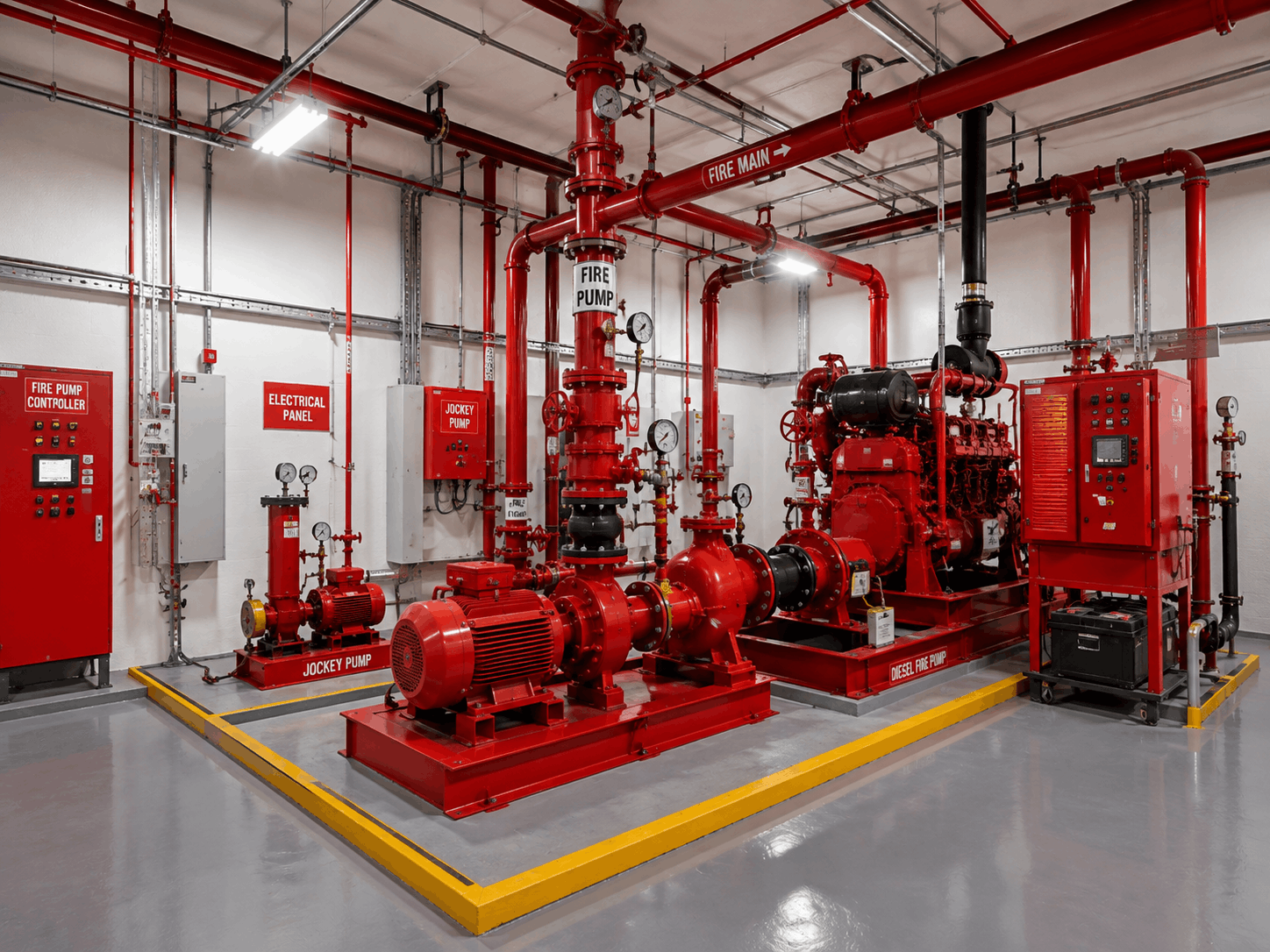
Boosts pressure to meet firefighting demand. We size pumps to NFPA 20 and DCD pump room specifications, based on the hydraulically most demanding hydrant, with a safety margin on both flow and pressure.
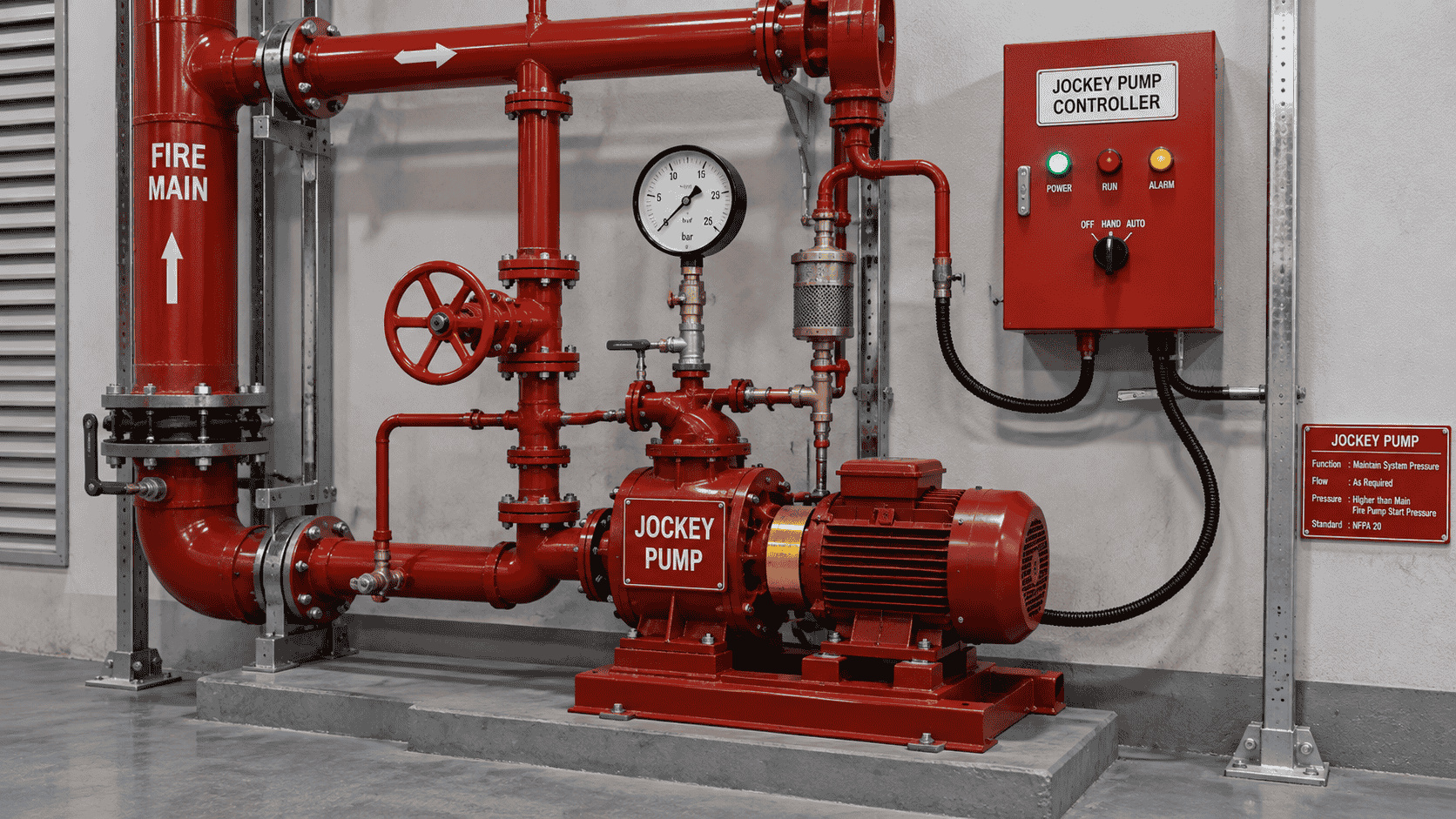
Maintains standby line pressure and prevents unnecessary cycling of the main fire pump — extending equipment life and keeping the system silent and ready between emergencies.
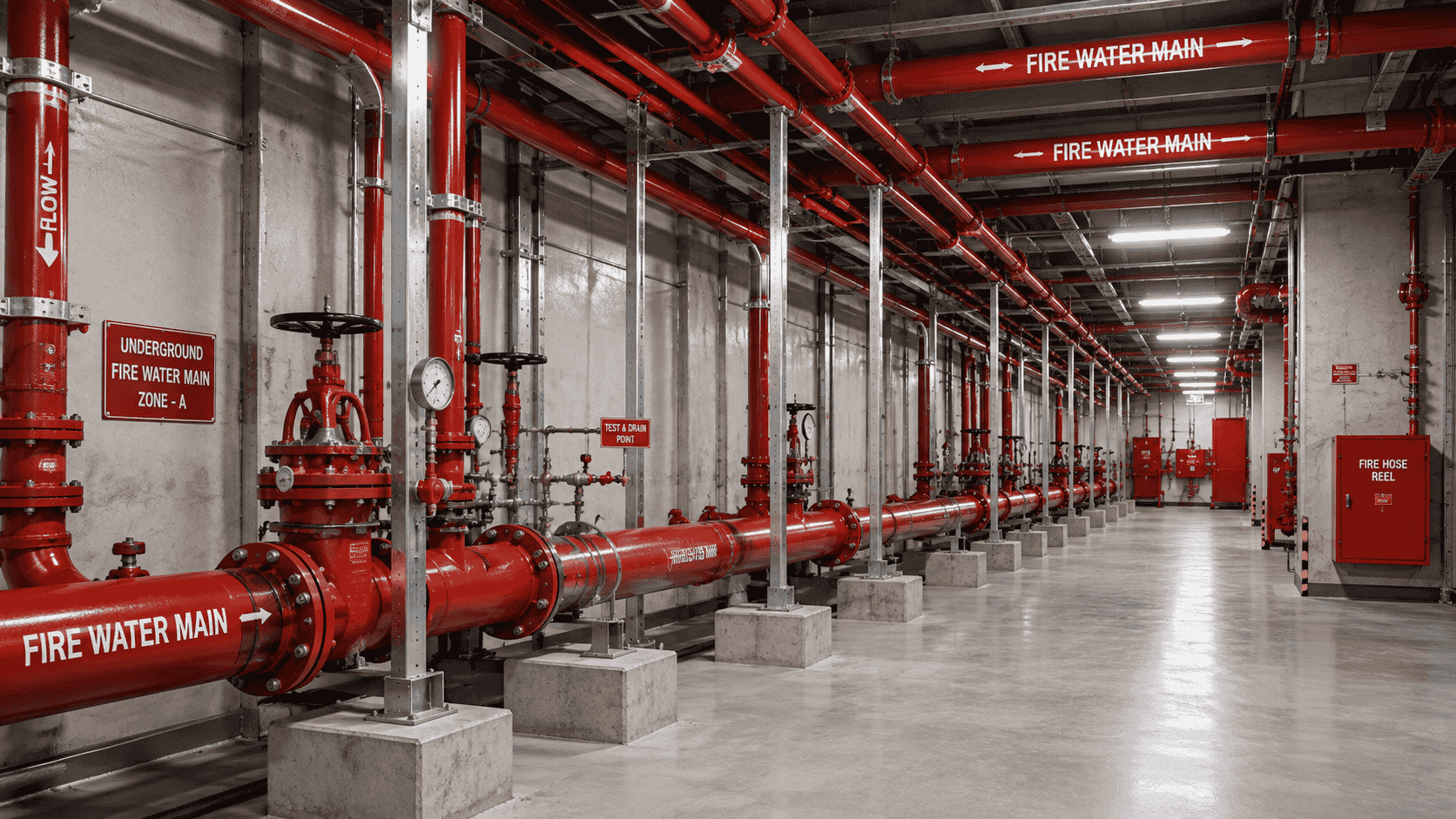
Ductile iron or HDPE pipe network distributing water from source to every hydrant outlet. Incorrect pipe sizing is the most common design failure our hydraulic calculations follow NFPA 24 and are reviewed by our senior engineer before DCD submission.
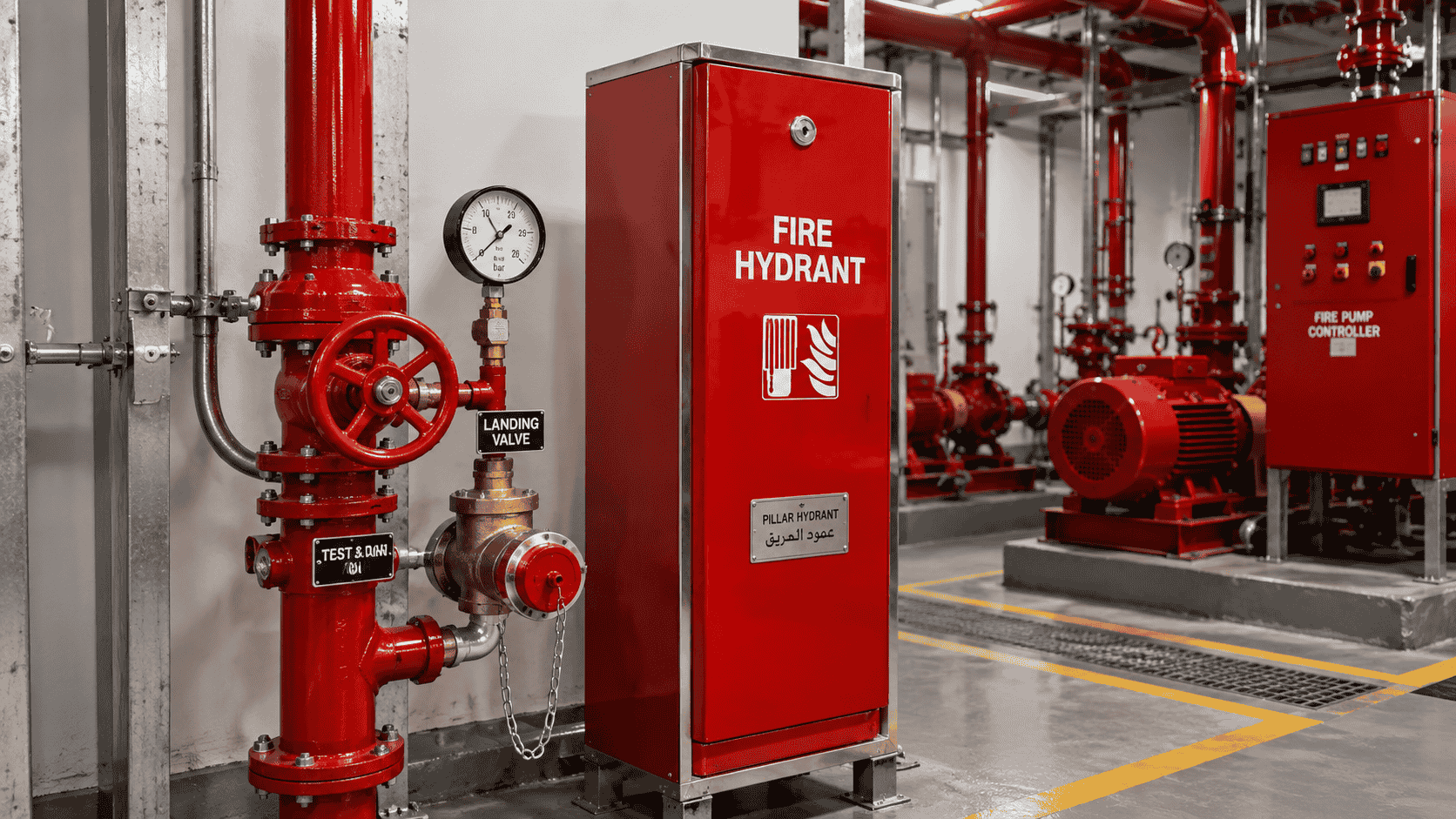
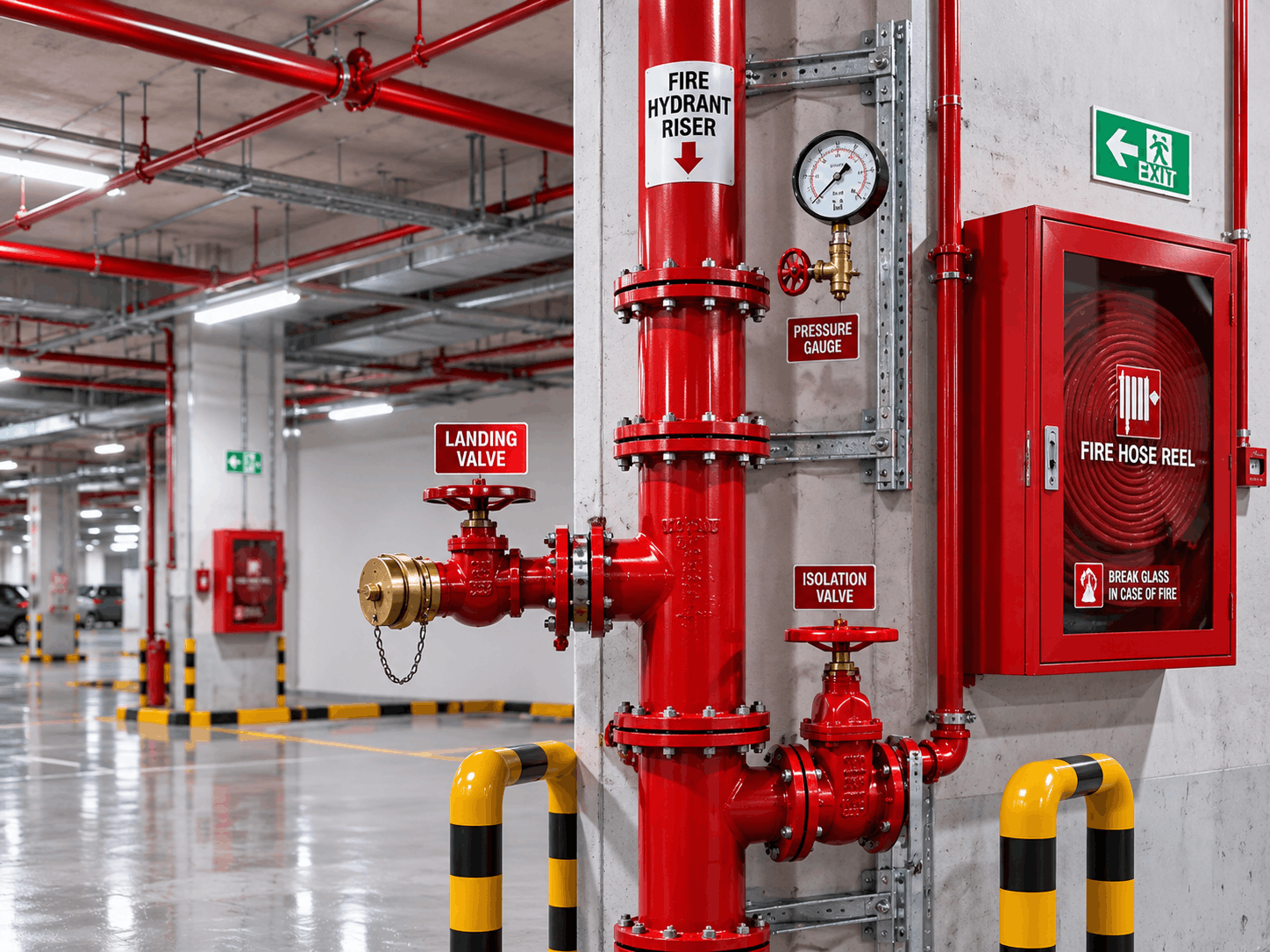
Connection points where firefighters attach hoses to access pressurised water — supplied in pillar, underground, and internal landing valve configurations from DCD-listed manufacturers.
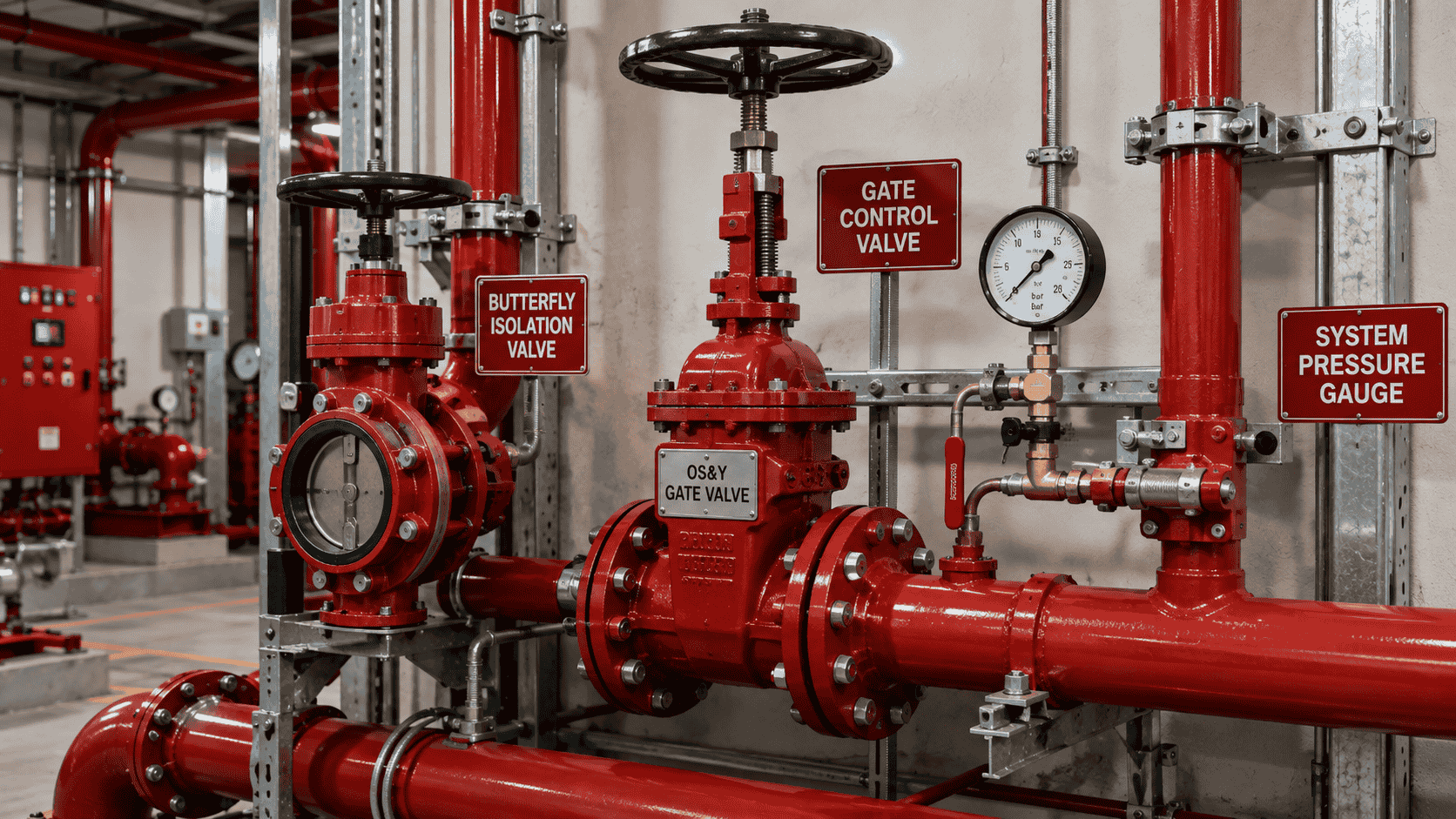
Regulate flow and pressure, and allow sections of the network to be isolated for maintenance without shutting down the entire system.
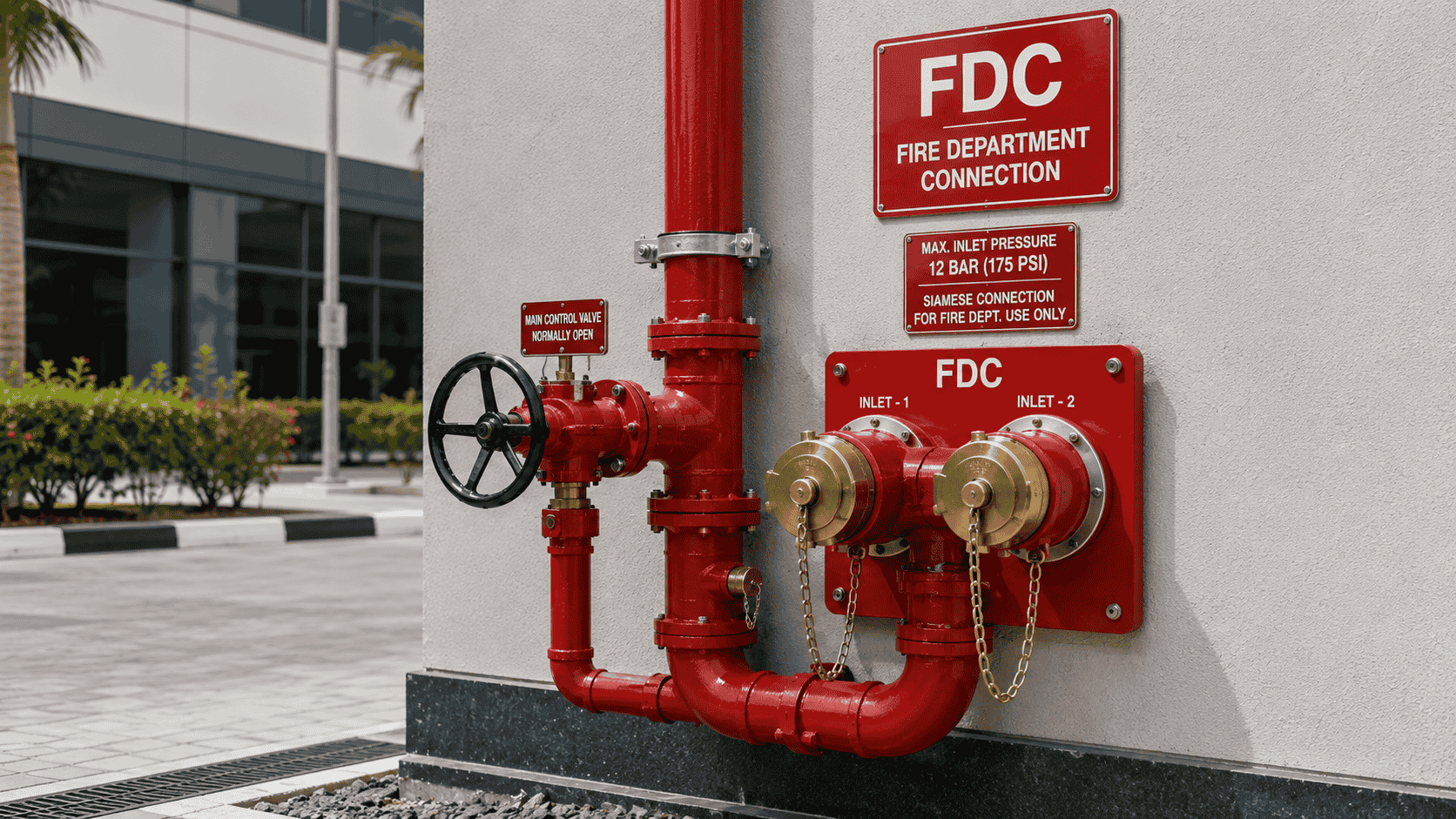
Lets the fire brigade pump additional water into the system from outside the building — a mandatory feature on every DCD-approved hydrant network.
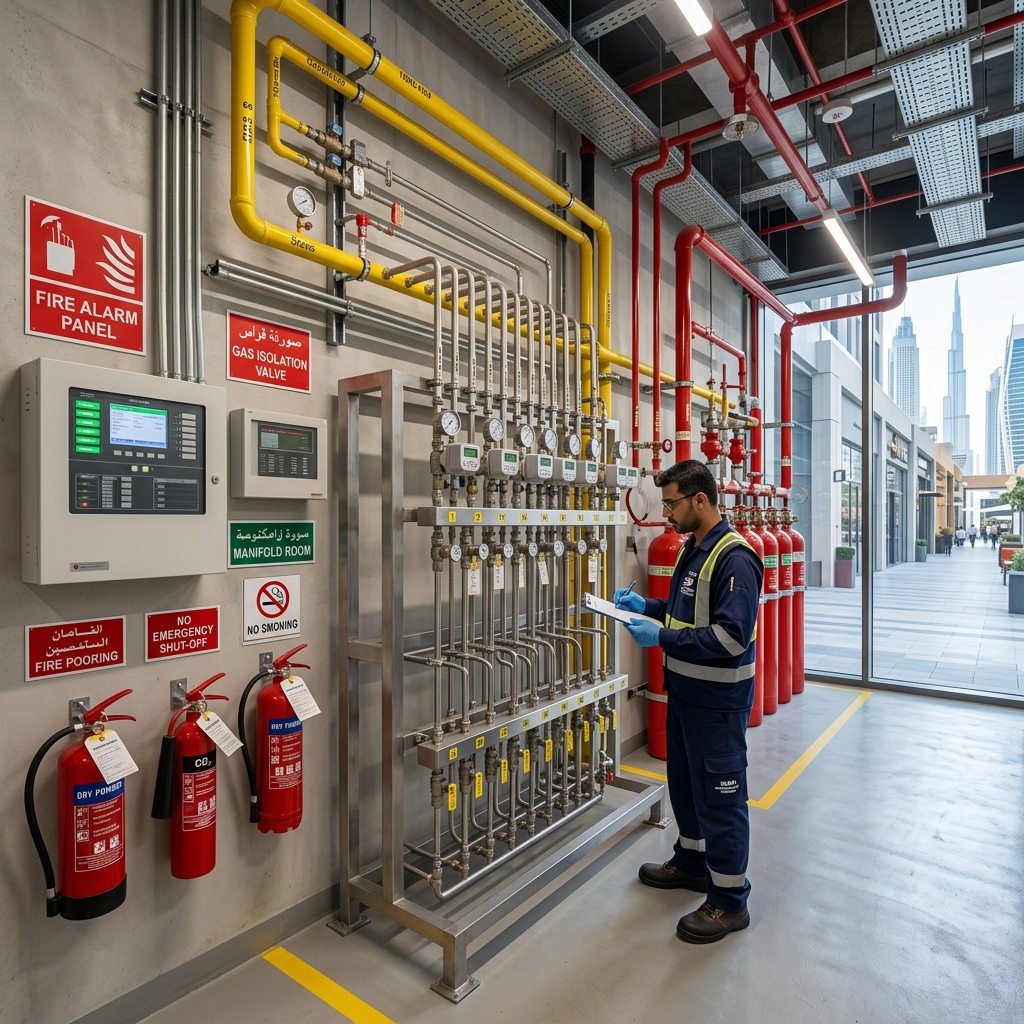
Every installation follows a disciplined, DCD-compliant process. No shortcuts — because a missed step means a failed inspection.
Step 1
Thorough site assessment
Step 2
Custom system blueprint
Step 3
Professional setup
Step 4
Full compliance check
Step 5
Ongoing support & AMC
These aren’t marketing claims they’re decades of documented fire loss data from the world’s most respected fire safety organisation In Dubai specifically, the UAE Fire & Life Safety Code adopts NFPA statistics as the technical basis for mandatory sprinkler requirements. A building with a properly installed fire sprinkler system doesn’t just comply with the law it is statistically and measurably safer for every person inside it. The insurance industry recognises this too: many UAE insurers offer premium reductions of 10–15% for buildings with certified sprinkler systems.
Every building, every industry, every risk profile is different. That’s why we don’t offer one-size-fits-all systems. Here’s how we protect Dubai’s most important sectors:
We supply and install complete fire hydrant system components, including hydrant valves, landing valves, hose reels, piping, fittings, and fire pump sets, sourced from globally certified and DCD-approved/listed manufacturers. Every component is selected for reliability, durability, and proven performance in the UAE’s demanding high-temperature and high-humidity environment, prioritizing long-term fire protection over low-cost alternatives.


Installing a fire hydrant system is only the beginning. Dubai Civil Defence requires documented, regular testing at set intervals a missed test is a failed inspection. Our AMC covers all of this automatically.
Our fire hydrant system installations are priced per site based on plot size, hydrant count, water supply availability, and DCD compliance requirements. One fixed installation price covers your complete project: site survey, hydraulic design, DCD design submission, material supply, full installation, hydrostatic pressure test, commissioning, and DCD Completion Certificate. No hidden charges.
Why Choose Us
There are dozens of fire companies in Dubai. Here’s what sets us apart specifically for fire hydrant system work:
Our DCD-approved hydrant designs are accepted by Dubai Civil Defence inspectors without supplementary requests, and our documentation is accepted at every DCD inspection without challenge.
Our engineers are trained to NFPA 24 — the code governing every hydraulic calculation, pipe sizing decision, and hydrant placement in your system. Every calculation is independently reviewed and stamped before DCD submission.
From the first site survey through hydraulic design, DCD submission, material procurement, installation, testing, commissioning, and final DCD Completion Certificate we manage every stage under one contract with one accountable team.
We’ve designed and installed fire hydrant systems across warehouses, labor camps, and towers from Ras Al Khor to Jebel Ali every installation challenge and DCD inspector requirement, already handled before.
A pipeline leak or pump failure needs immediate expert response. Our emergency team covers isolation, emergency repair, and recommissioning 24 hours a day. AMC clients receive priority response at no extra call-out charge.
Every quotation itemises material costs, labour, DCD submission fees, and hydraulic calculation fees separately. Fixed price from survey to DCD Completion Certificate.
Yes. Under Dubai Civil Defence regulations and the UAE Fire & Life Safety Code, fire hydrant systems are mandatory for most warehouses, industrial plots, labor accommodation, construction sites, and high-rise developments above a defined footprint or occupancy. Buildings without a DCD-approved hydrant system cannot receive their occupancy permit or trade licence.
Cost depends on plot size, required fire flow, pipeline length, number of hydrants, and pump specification. We provide a fixed-price itemised quotation after a free site survey contact us at +971 566 707 932 for a noobligation assessment.
Timelines vary by site size. A small compound typically takes 1–2 weeks; a large warehouse or multi-block labor camp can take 4–8 weeks from DCD design approval to commissioning. DCD design submission and approval typically adds 2–4 weeks, which we factor into every project programme.
A wet barrel hydrant has water in the barrel at all times for instant use. A dry barrel hydrant keeps the valve below ground, with water only entering the barrel once opened used where freezing or corrosion risk applies, such as cold storage facilities.
Dubai Civil Defence and NFPA 25 require monthly visual inspection, quarterly functional testing, and a full annual flow and pressure test including fire pump performance verification.
Common causes include valve corrosion, pressure loss, fire pump faults, damaged pipework, or blocked hydrant outlets most are preventable through routine AMC inspection and testing.
Yes. Existing systems can be expanded or upgraded to support building extensions, increased fire flow requirements, or updated DCD regulations — we assess the existing network and design the upgrade around it.
Yes. Labor accommodation and multi-building compounds are one of our most common hydrant installation projects typically a shared ring main network connecting several blocks to a single water source.
All design, installation, and testing work follows NFPA 24 (Private Fire Service Mains), NFPA 25 (Inspection, Testing and Maintenance), NFPA 291 (Fire Flow Testing), and Dubai Civil Defence regulations.
Yes. We offer structured annual maintenance contracts covering monthly, quarterly, and annual testing, full compliance documentation, and 24/7 priority emergency response at no extra call-out charge.
Don’t wait for a failed DCD inspection, a denied occupancy permit, or an actual fire to discover your building is unprotected. Let our NFPA 13-certified engineers survey your building and deliver a fixed-price fire sprinkler installation from design through to DCD Completion Certificate.
“Abdullah Fire Safety System is a premier DCD-approved provider with over 10 years of expertise in the UAE market. We specialize in the installation and maintenance of advanced fire protection systems, ensuring 24/7 safety and full compliance for commercial, industrial, and residential properties across Dubai.”